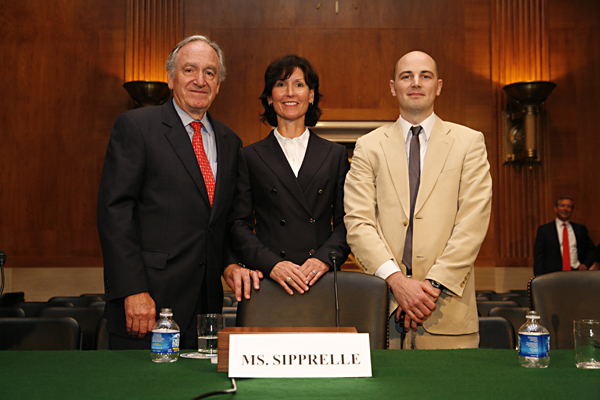
Last Thursday, Over 50 and Out of Work testified before the Senate Health, Education, Labor and Pension committee hearing Stories from the Kitchen Table: How Middle Class Families are Struggling to Make Ends Meet. Unfortunately, we were only asked one question, because we had so much more information on unemployment and underemployment that we were prepared to contribute to the hearing.
Rhode Island Senator Sheldon Whitehouse asked what people do when their unemployment benefits run out. In particular, he inquired about one of our R.I. interviewees, George Dys. We responded that George is now scraping by on part-time jobs and continuing to deplete his dwindling savings. George’s underemployed status is common, both for our interviewees and nationwide.
In May, the national unemployment rate was 9.1 percent, but the underemployment rate was 15.8 percent. Of course, underemployment is tricky to measure, so the actual rate may be much higher.
At the present time, about 40 of our 100 interviewees are severely underemployed. Their unemployment benefits have expired, and they are now cobbling together a living from one or more part-time jobs. They continue to deplete any remaining savings they may have, including tapping into retirement funds; they sell their assets such as cars, furniture or collectibles, and they rely on family and friends to help them out when they are in dire need. Several of our interviewees have also been forced to use food banks for the first time in their lives.
Recently, the New York Times addressed the topic of underemployment in Job Jugglers, on the Tightrope, but the story featured only younger workers, four 20-somethings. Underemployment is even more challenging and frightening for older workers because they usually have higher living expenses, including mortgage payments, and families to support as well.
Elizabeth Zima, 57, of Calistoga, Calif., a former writer and editor on healthcare issues, now works part-time at three wineries. She earns 50 percent of her former salary, no longer has health insurance, owes outstanding medical bills and cannot afford to pay her taxes.
Before the Great Recession, Bill Davis, 59, of Myrtle Beach, S.C., earned a six-figure income as an executive recruiter in the IT industry. Now, he drives a cab at night. Demand for taxi service during the tourist season in Myrtle Beach allows him to make a meager living, but once the weather cools, his customers depart. Fortunately, he is a veteran, so he has access to medical care, but he cannot afford to pay for his son to go to college.
Joel Nitzberg, 57, of Somerville, Mass., lost his job when the community education department he headed was eliminated to slash costs at a local college. Joel found full-time work as a consultant, but his position does not offer benefits and ends on July 30. When he and his wife were both out of work last summer, they experienced the terrifying feeling of living without the safety net of health insurance. Happily, his wife was able to find a new full-time job in her field that provides health care coverage for the couple once again.
The Times story emphasized the new skills that the younger workers are gaining in their part-time jobs — multitasking, hyper-organization and enhanced knowledge of technology.
For our older interviewees, the underemployment they are enduring does not seem to be building their knowledge or skills. Their part-time jobs do not help them regain their financial footing or build up their savings and financial security for their later years.
They struggle on, because as they say, what else can we do?
